Imagine this: you buy a smart light bulb, plug it in, it works with Alexa. Six months later, you decide to switch to a different voice platform. That bulb is now a dumb bulb — or at best, a paperweight that glows. This is vendor lock-in, and it's the dirty secret of the consumer smart home industry.
The three major ecosystems — Amazon Alexa, Google Home, and Apple HomeKit — are designed to be sticky. They make it easy to buy their hardware, difficult to use anything else, and nearly impossible to leave without replacing everything. But there is a better way.
By combining open-source platforms like Home Assistant with local-only voice control hardware, you can build a smart home that respects your autonomy, protects your privacy, and works entirely on your terms — no subscriptions, no data harvesting, and no single point of vendor failure.
What Vendor Lock-In Looks Like Today
Vendor lock-in isn't just inconvenient — it's expensive. A 2024 survey by the Consumer Technology Association found that the average smart home owner had spent over $1,200 on devices, with 43% reporting they'd replace at least one major ecosystem component within two years. That's hundreds of dollars of perfectly good hardware destined for a landfill, not because it broke, but because the vendor changed direction.
Here are the three most common forms of lock-in you'll encounter:
- Protocol lock-in: Your devices only speak one protocol (Zigbee, Z-Wave, Thread, Wi-Fi) and the vendor's hub only supports their branded devices.
- Platform lock-in: Voice control only works with Alexa, Google, or Siri — and each platform restricts which third-party devices can integrate.
- Cloud lock-in: All voice processing, automation logic, and device management happens in the vendor's cloud. If they shut down the service, your home goes dumb.
The Open Platform Alternative
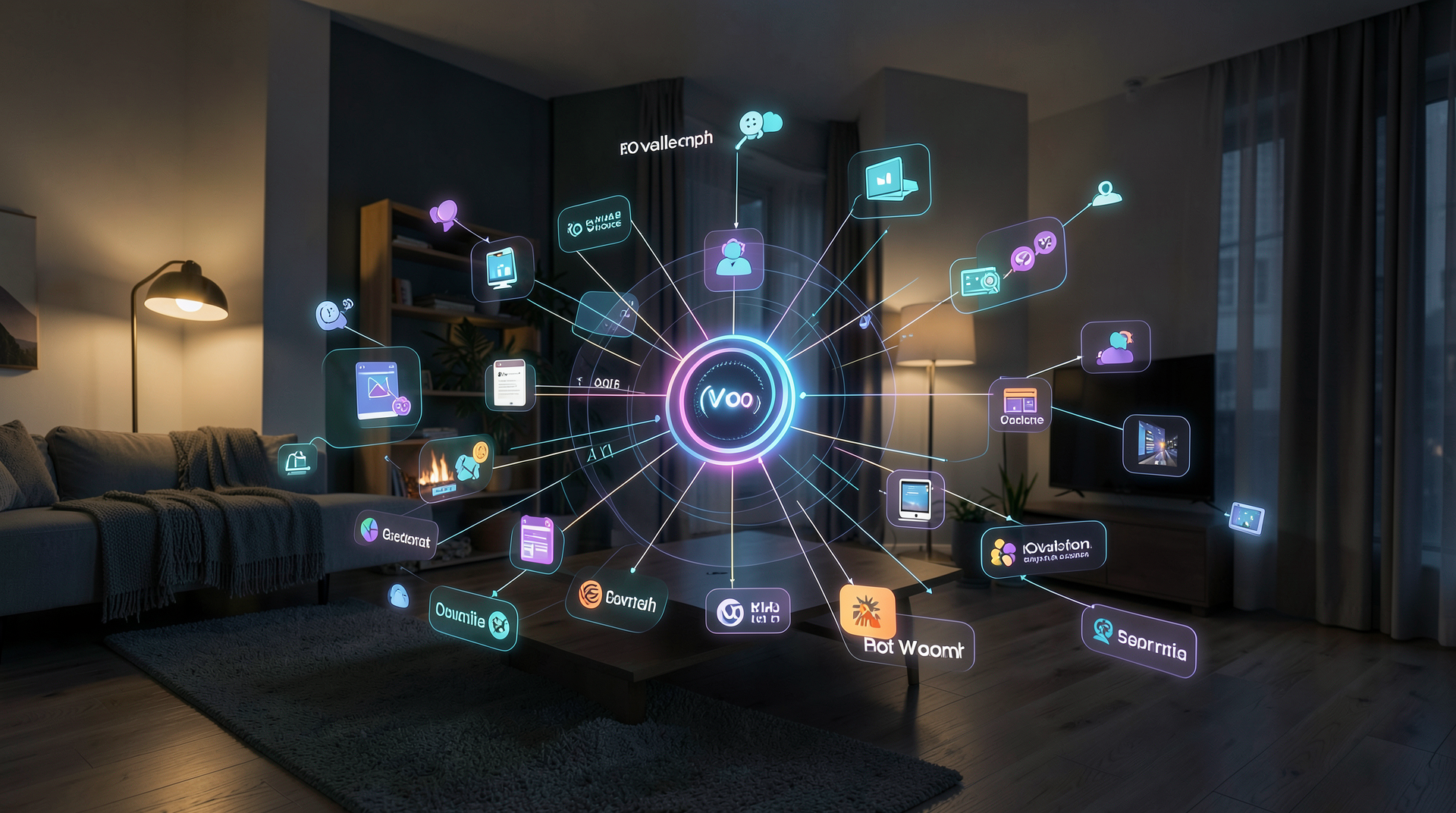
The antidote to vendor lock-in is an open, local-first smart home platform. Home Assistant is the most mature option: an open-source home automation platform that runs on a Raspberry Pi, a mini PC, or an NVIDIA Jetson device like the NexLine Voice Box. It supports over 2,000 integrations across hundreds of brands and protocols.
With an open platform, you aren't choosing a "smart home company." You're choosing a standard that works with everything. Your Zigbee sensor from Aqara talks to your Wi-Fi smart plug from TP-Link, which triggers your Z-Wave dimmer from Zooz — all orchestrated by a single local controller with no cloud dependency.
Mix and Match Hardware
Want a Lutron Caseta light switch in the living room, a Philips Hue bulb in the reading lamp, and a Sonoff relay behind the garage door opener? With Home Assistant, that's not a problem. The platform abstracts away the brand and protocol differences so you can use the best tool for each job without worrying about ecosystem compatibility.
Local Voice Control — The Missing Piece
For years, the weak link in the open smart home was voice control. Home Assistant has built-in voice capabilities (Assist), but running it on general-purpose hardware meant slow responses and mediocre microphone pickup. Dedicated local voice assistant hardware changes that. A device like the NexLine Voice Box runs Whisper and Kokoro entirely on-device — no cloud round trip, sub-300ms response times, far-field microphone arrays, and full offline operation.
When you say "turn off the kitchen lights," that command is transcribed, processed, and executed entirely within your home. Your voice never touches the internet.
Comparing the Ecosystems
To see how the major platforms stack up against an open approach, here's a side-by-side comparison:
| Feature | Amazon Alexa | Google Home | Apple HomeKit | Open Platform (HA + Local Voice) |
|---|---|---|---|---|
| Hardware choice | Amazon-approved only | Google-approved only | MFi-certified only | Any brand or protocol |
| Voice processing | Cloud-dependent | Cloud-dependent | Cloud-dependent (Siri) | 100% local, no cloud |
| Monthly cost | Free tier limited / subscription optional | Free tier limited | No cost but limited hardware | $0 recurring |
| Privacy model | Voice recorded, analyzed, shared | Voice recorded, analyzed | Partial on-device, still uses cloud | Voice never leaves home |
| Offline operation | Very limited | Very limited | Partial | Full offline capability |
| Switching cost | Replace all hardware | Replace all hardware | Replace all hardware | Zero — keep everything |
| Automation power | Simple Alexa Routines | Simple Routines | Basic automations | Advanced scripting, triggers, templates |
How to Build Your Lock-In-Free Smart Home
Transitioning from a vendor-controlled smart home to an open one doesn't have to happen overnight. Here's a practical roadmap:
Step 1: Choose Your Brain
Decide where your home automation platform will run. A Raspberry Pi 5 is a popular entry point, but for serious setups with voice control, a more powerful device like the NexLine Voice Box (built on the NVIDIA Jetson Orin Nano) gives you local AI voice processing alongside your automation server — all in one box.
Step 2: Install Home Assistant
Home Assistant's installation has never been easier. Use the official Home Assistant OS image for Raspberry Pi, run it as a Docker container on an existing server, or let the NexLine Voice Box come pre-configured. Within minutes, you'll have a dashboard that can discover devices on your network.
Step 3: Bridge Your Existing Devices
You don't need to throw away your existing smart home gear. Home Assistant can integrate with Alexa and Google Home devices through their APIs, use Zigbee dongles to control Hue bulbs directly, and even reverse-engineer cloud protocols via integrations like the LocalTuya project. Most of your current hardware can be brought under open control.
Step 4: Add Local Voice Control
Once your automations are running, add voice control through a local voice assistant box. The NexLine Voice Box connects directly to Home Assistant via its local API, giving you hands-free control of every device and scene — all processed on-device with no cloud dependency.
Step 5: Cut the Cord
Once everything is working locally, slowly remove your dependency on cloud services. Disable the Alexa skill, remove Google Home from the equation, and watch your smart home become faster and more reliable without them. You'll wonder why you ever tolerated the delays and privacy compromises of cloud-dependent voice control.
The Freedom to Change Your Mind
The most important principle of any smart home should be your ability to change your mind. You should be able to buy a new light switch because it has the perfect dimmer feel — not because it works with your voice platform. You should be able to switch from Zigbee to Thread when the technology matures — without replacing your entire system. And you should be able to choose a voice assistant provider based on features and privacy, not because you're already trapped in their ecosystem.
An open, local-first smart home gives you that freedom. It's not just about privacy — though that's a significant benefit. It's about building a home that's truly yours, controlled by hardware you own, running software you trust.
As the smart home industry matures, the trend is clear: homeowners are waking up to the costs of vendor lock-in. They're choosing platforms that put them in control rather than companies that treat them as products. And for voice control — the most natural interface for home automation — that means choosing local processing over cloud dependency, open integration over walled gardens, and ownership over subscription.
Frequently Asked Questions
What is vendor lock-in in smart homes?
Vendor lock-in means your smart home devices are tied to a single ecosystem — like Amazon Alexa, Google Home, or Apple HomeKit. If you want to use a different voice assistant or platform, many of your devices stop working or lose functionality. This forces you to either stay with that vendor or replace all your hardware.
How do I avoid vendor lock-in with my smart home?
Use an open platform like Home Assistant that supports thousands of devices across brands and protocols. Combine it with a local voice assistant box (like the NexLine Voice Box) for voice control that doesn't depend on any cloud service. This lets you mix and match products freely without being forced into a single ecosystem.
Can I keep my existing Alexa or Google devices if I switch to an open platform?
Yes — at least partially. Home Assistant can integrate with Alexa and Google Home through their APIs, allowing you to control open-platform devices through your existing smart speakers. Over time, as you add native local devices and a dedicated voice assistant box, you can gradually reduce and eventually eliminate your cloud dependency.
Do I need to be technical to set up a lock-in-free smart home?
Not anymore. Pre-configured hardware like the NexLine Voice Box comes with Home Assistant pre-installed and the voice pipeline ready to go. Installation is as simple as plugging in power and Ethernet. More advanced customization is available for power users, but the baseline experience is designed for anyone comfortable with a smartphone app.
Matter/Thread: Matter standard — industry-wide protocol for interoperable smart home devices from Apple, Google, Amazon, and Samsung
Vendor-independent approach: The NexLine architecture demonstrates a vendor-agnostic smart home — Loxone Miniserver + Home Assistant API + local AI, all working together without proprietary cloud lock-in.